


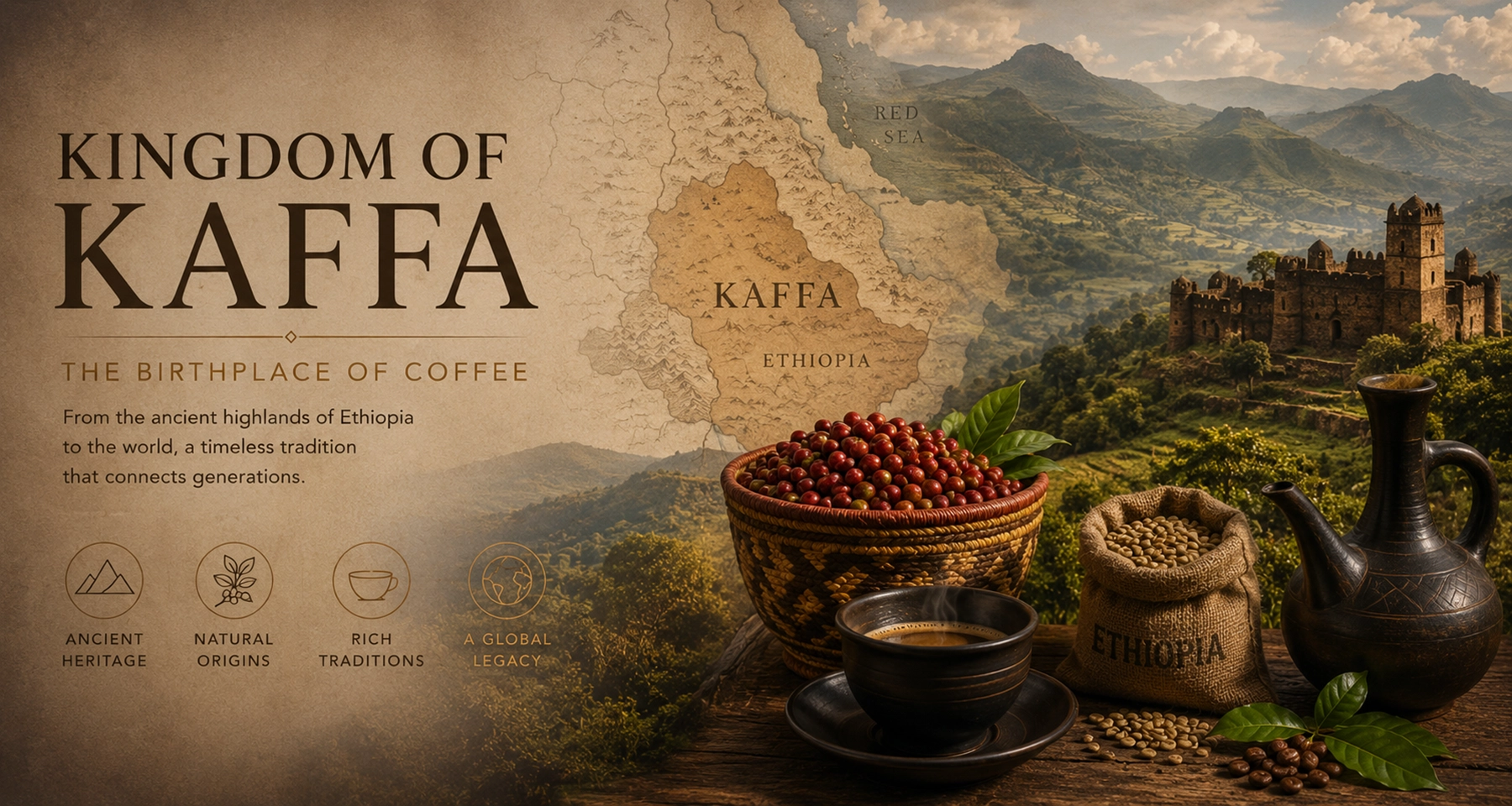
Kingdom of Kaffa
The birthplace of coffee in Kaffa
The story of coffee begins far before modern cafés, espresso machines and international coffee brands. Deep in the highlands of present-day Ethiopia once stood the ancient Kingdom of Kaffa, a lush and mountainous region widely believed to be one of the birthplaces of coffee.
Many historians connect the word “coffee” to the name Kaffa, although the exact linguistic origins are still debated. What is certain, however, is that wild coffee plants naturally grew in this region for centuries, long before coffee became one of the world’s most traded products.
The Birthplace of Coffee Culture
The Kingdom of Kaffa was located in southwestern Ethiopia, an area blessed with fertile soil, high elevations and rich rainfall — ideal conditions for coffee plants. Local communities were familiar with coffee long before it spread across the Middle East and Europe.
Early forms of coffee consumption were very different from the drinks we know today. In some traditions, coffee cherries were crushed and mixed with animal fat or grains to create energy-rich food for travelers and warriors. Later, roasting and brewing methods slowly evolved into recognizable coffee preparation techniques.
Coffee was not originally a luxury drink. It was part of daily life, nature and local tradition.
The Legend of Kaldi
One of the most famous coffee legends is connected to Ethiopia and the Kaffa region. According to the story, a goat herder named Kaldi noticed his goats becoming energetic after eating red berries from a certain plant.
Curious about the effect, local monks reportedly experimented with the berries and discovered that the drink helped them stay awake during long hours of prayer and meditation.
Whether the story is historically accurate or not, it became one of the most enduring legends in coffee history and helped strengthen Kaffa’s connection to the origins of coffee.
From Ethiopia to the World
From the Ethiopian highlands, coffee eventually traveled across the Red Sea into Yemen, where cultivation and organized coffee trade began to flourish. Ottoman merchants later helped spread coffee culture throughout the Middle East, North Africa and Europe.
Coffeehouses became important social spaces where people gathered to talk, read, discuss politics, trade ideas and enjoy conversation. Over time, coffee transformed from a regional plant into a global cultural tradition.
Today, coffee grown in Ethiopia is still considered among the world’s most respected and distinctive coffees, known for floral aromas, bright acidity and complex flavors.
A Legacy That Continues
The Kingdom of Kaffa may no longer exist as an independent kingdom, but its legacy lives on every day through coffee itself. From traditional Ethiopian ceremonies to modern specialty cafés around the world, the influence of this historic region continues to shape global coffee culture.
Every cup of coffee carries a small part of that long journey — from the forests of Kaffa to homes, cafés and coffee lovers across the world.




You must be logged in to post a comment.