

Coffee Around The World
Coffee Around The World
Coffee may begin with a simple bean, but around the world it has become something much greater: a ritual, a tradition, a social experience, and an expression of culture.
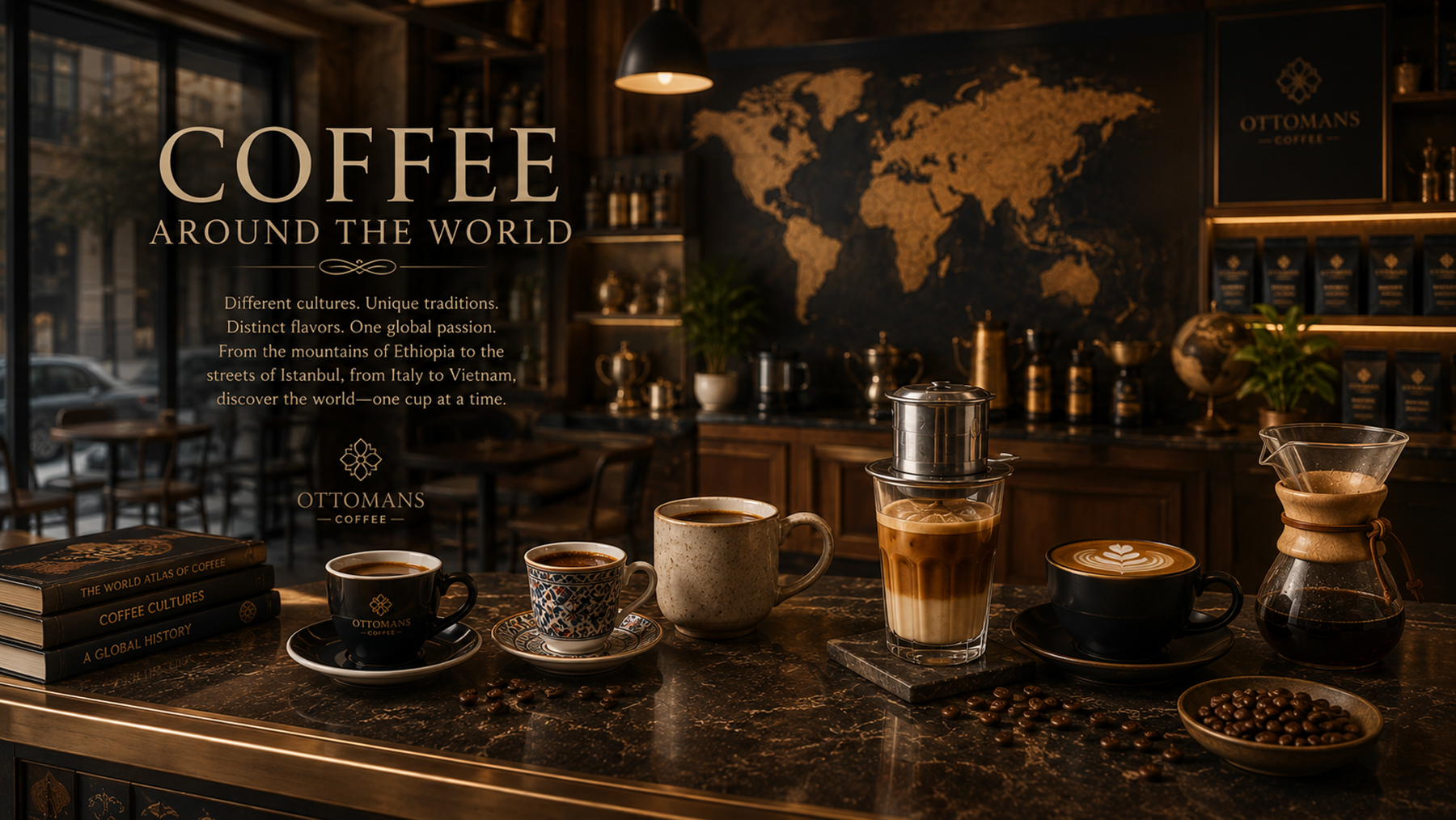
From the coffeehouses of Istanbul to the espresso bars of Italy, from Ethiopia’s traditional coffee ceremonies to the slow-dripping cafés of Vietnam, every culture has developed its own way of roasting, brewing, serving, and enjoying coffee. Some traditions are centuries old. Others were shaped by newer technologies and changing lifestyles. Together, they tell the remarkable story of how coffee traveled across continents and became one of the world’s most beloved drinks.
One Bean, Many Traditions
Coffee’s journey began in East Africa, with Ethiopia generally recognized as the birthplace of Coffea arabica. From there, coffee crossed the Red Sea into Yemen, where cultivation and trade helped transform it into the brewed beverage we recognize today.
By the 16th century, coffee had become an important part of life throughout the Ottoman world. Coffeehouses flourished in cities including Istanbul, Cairo and Damascus, creating places where people could gather, converse, exchange news and enjoy coffee together.
As coffee traveled farther into Europe, Asia and eventually the Americas, local cultures adapted it to their own tastes. Different roasting methods, brewing techniques, ingredients and customs emerged, creating the extraordinary variety of coffee traditions we know today.
Turkish Coffee
Turkish coffee is one of the oldest surviving coffee preparation traditions in the world. Finely ground coffee is slowly brewed in a cezve and served unfiltered in a small cup, allowing the grounds to settle naturally at the bottom.
But Turkish coffee is about much more than preparation. For centuries it has been associated with hospitality, conversation, celebrations and social rituals. Its cultural importance is so significant that Turkish coffee culture and tradition were added to UNESCO’s Representative List of the Intangible Cultural Heritage of Humanity.
Arabian Mirra Coffee
Across parts of the Middle East, coffee developed traditions distinctly different from those of neighboring regions.
Mirra is particularly known for its intense flavor and ceremonial preparation. The coffee may be roasted deeply and brewed repeatedly to produce a concentrated drink, traditionally served in very small quantities. Cardamom and other spices may also become part of regional preparations.
Serving coffee is closely connected with hospitality, respect and generosity. The way coffee is prepared, presented and shared can carry meanings extending far beyond the drink itself.
Italian Espresso
Italy transformed coffee culture through espresso.
Rather than slowly brewing coffee, an espresso machine forces hot water through finely ground coffee under pressure, producing a small, concentrated drink with remarkable intensity.
Espresso became the foundation of an entire family of drinks, including cappuccino, caffè latte, macchiato and many others. Italian café culture also helped establish the modern coffee bar: a place where excellent coffee could be prepared quickly and enjoyed as part of everyday life.
Ethiopian Coffee
In Ethiopia, coffee remains deeply connected to its origins.
The traditional Ethiopian coffee ceremony can involve roasting green coffee beans, grinding them and brewing the coffee in a jebena before serving it in small cups. The process is deliberately social and can take considerable time.
Rather than treating coffee simply as a quick source of caffeine, the ceremony makes preparation itself part of the experience — an opportunity for hospitality, conversation and community.
Ethiopia is also home to extraordinary coffee diversity, with different regions producing beans known for floral, fruity, citrus, spice and chocolate characteristics.
Indian Filter Coffee
South India developed one of the world’s most distinctive filter coffee traditions.
Finely ground coffee — often blended with chicory — is placed inside a metal coffee filter and slowly brewed into a concentrated decoction. This is mixed with hot milk and traditionally served in a metal tumbler and dabarah.
Strong, aromatic and creamy, Indian filter coffee became especially associated with everyday life in southern Indian states such as Tamil Nadu and Karnataka.
Vietnamese Coffee
Vietnamese coffee reflects both local ingredients and historical influences.
Coffee is commonly brewed using a small metal phin filter positioned directly over the cup. The slow extraction produces a strong, concentrated coffee that pairs particularly well with sweetened condensed milk.
Served hot or over ice, Vietnamese coffee is famous for the contrast between powerful coffee and rich sweetness. Vietnam has also become one of the world’s major coffee-producing countries and is particularly important to global Robusta production.
Coffee in the Americas
Coffee eventually crossed the Atlantic and became deeply rooted throughout the Americas.
Brazil grew into the world’s largest coffee-producing country, while Colombia became internationally associated with high-quality Arabica coffee. Central American countries developed their own celebrated growing regions, influenced by altitude, volcanic soil, rainfall and local processing traditions.
In the United States, coffee culture evolved differently. Filter and drip coffee became everyday staples before the modern specialty-coffee movement introduced a much wider audience to single-origin beans, lighter roasting styles and carefully controlled brewing techniques.
Modern Specialty Coffee
Today, coffee culture is more international than ever.
A café in New York might serve an Italian-style espresso, Ethiopian single-origin pour-over, Vietnamese-inspired iced coffee and Turkish coffee under the same roof. Brewing methods such as the French press, AeroPress, Chemex and pour-over have traveled far beyond the countries where they first became popular.
At the same time, specialty coffee has encouraged greater interest in where coffee comes from. Coffee lovers increasingly pay attention to origin, altitude, processing method, roast profile and even individual farms.
The result is a fascinating combination of tradition and experimentation.
A World Connected by Coffee
Every country has its own relationship with coffee.
It may arrive in a porcelain cup, a tiny demitasse, a glass filled with ice, a metal tumbler or a simple everyday mug. It can be thick and powerful, delicate and floral, intensely roasted, lightly roasted, sweetened, spiced, mixed with milk or enjoyed completely black.
The preparations may be different, but the idea behind them is remarkably similar.
For centuries, people have gathered around coffee.
Across languages, borders and generations, coffee continues to create a reason to sit together, talk, welcome a guest — or simply enjoy a quiet moment.
That may be coffee’s greatest tradition of all.