


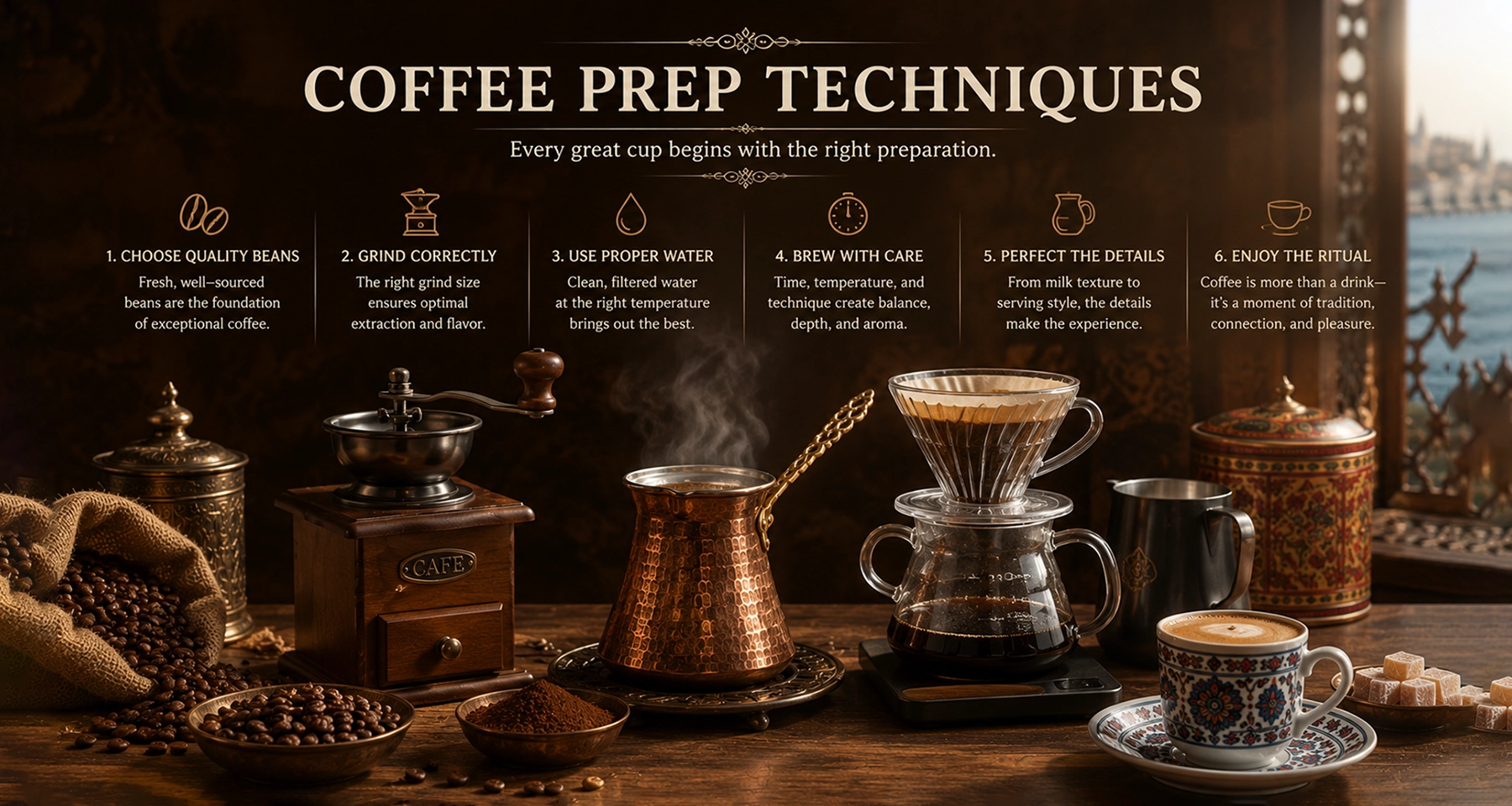
Coffee Preparation Techniques
Coffee preparation step-by-step guide
Great coffee begins long before the first sip.
From selecting quality beans to grinding, brewing, and serving, every step in the preparation process influences the final aroma, texture, and flavor of coffee.
Across cultures and generations, coffee preparation has evolved into both a craft and a ritual — combining technique, patience, and personal taste.
Choosing Fresh Coffee Beans
One of the most important elements of coffee preparation is bean quality.
Freshly roasted coffee beans generally provide:
- richer aroma,
- fuller flavor,
- and better overall balance.
Coffee enthusiasts often choose beans based on:
- origin,
- roast level,
- processing method,
- and flavor profile.
Proper storage is also important. Coffee is best preserved in airtight containers away from heat, moisture, and direct sunlight.
Grinding Matters
Grinding coffee correctly is essential for proper extraction.
Different brewing methods require different grind sizes:
- Fine grind → Turkish coffee and espresso
- Medium grind → Pour-over and drip coffee
- Coarse grind → French press and cold brew
Grinding coffee immediately before brewing helps preserve aroma and freshness.
Water Temperature
Water quality and temperature play a major role in coffee preparation.
Water that is too hot may create bitterness, while water that is too cool may result in under-extraction and weak flavor.
Most brewing methods perform best with water temperatures between:
90°C and 96°C (195°F–205°F)
Clean, filtered water is generally preferred for balanced flavor.
Brewing Time & Extraction
Brewing time directly affects flavor and body.
Short extraction times may produce sour or weak coffee, while overly long extraction may create bitterness.
Each brewing method has its own ideal balance between:
- grind size,
- water ratio,
- temperature,
- and brewing time.
Mastering these variables is part of the artistry of coffee preparation.
Milk Preparation
For espresso-based drinks such as cappuccino and latte, milk texture becomes another important preparation technique.
Proper steaming creates:
- silky microfoam,
- smooth texture,
- and balanced integration with espresso.
Milk preparation is also essential for latte art and presentation.
Traditional Preparation Methods
Many traditional coffee cultures continue to value slow and deliberate preparation techniques.
Turkish coffee, for example, is traditionally brewed slowly in a copper cezve, producing a rich texture and velvety foam.
The preparation ritual itself is often considered part of the enjoyment.
Coffee As A Ritual
For many people, coffee preparation is more than simply making a beverage.
It is:
- a daily ritual,
- a creative process,
- a moment of calm,
- and an expression of hospitality and craftsmanship.
Whether preparing espresso, pour-over coffee, French press, or traditional Turkish coffee, attention to detail can transform an ordinary cup into a memorable experience.
At Ottomans Coffee, we celebrate the timeless techniques and traditions behind exceptional coffee preparation.