


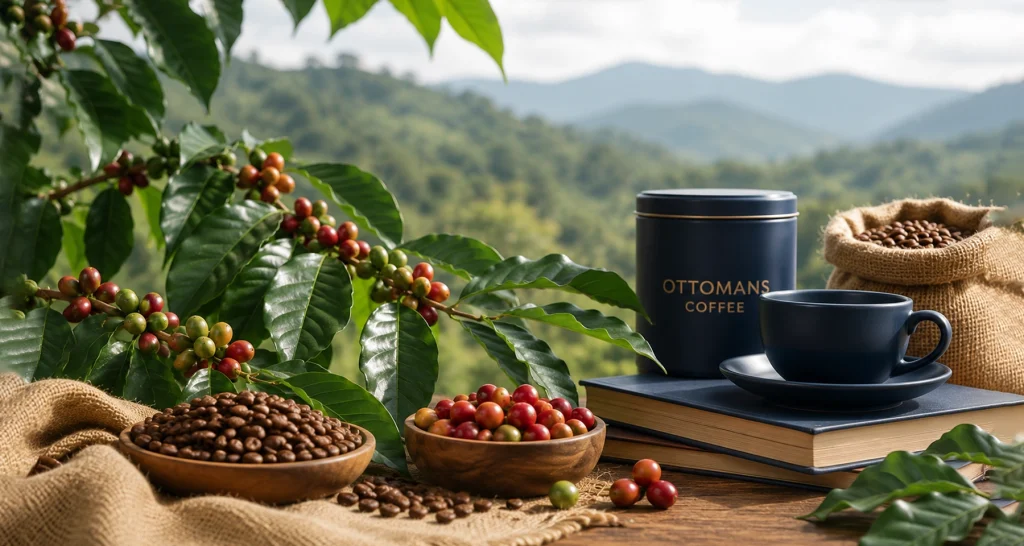
Rustic coffee scene with mountain backdrop
The Plant Behind Every Cup
Coffee begins with a plant known as Coffea, a flowering genus of plants native to tropical regions of Africa and nearby islands. The beans we know as coffee are actually the seeds found inside the fruit of the Coffea plant, commonly called “coffee cherries.”
For centuries, Coffea plants have been cultivated across different climates and regions, eventually becoming one of the world’s most recognized and enjoyed agricultural products. Today, coffee culture connects people across continents, traditions, and generations.
The two most widely known species are Coffea arabica and Coffea canephora (commonly known as Robusta). Each offers distinct characteristics in flavor, aroma, caffeine content, and growing conditions.
Arabica & Robusta
Arabica
Arabica coffee is known for its smoother, softer, and more refined flavor profile. It often carries delicate notes such as chocolate, fruit, nuts, or floral tones. Arabica plants generally grow at higher elevations and require more careful cultivation.
Robusta
Robusta coffee contains higher caffeine levels and typically delivers a bolder, stronger taste with earthy and intense characteristics. It is more resilient to heat and environmental conditions, making it easier to cultivate in lower-altitude regions.
Many coffee blends combine both species to create balance, depth, and complexity.
From Cherry To Bean
The journey of coffee begins with ripe coffee cherries harvested from Coffea trees. After harvesting, the fruit is processed, dried, and the seeds are carefully extracted. These seeds are then roasted to develop the aromas and flavors associated with coffee.
Roasting transforms green coffee beans into the rich, fragrant beans used in brewing traditions around the world.
A Global Agricultural Treasure
Coffee cultivation supports millions of people globally, from farmers and harvesters to roasters, baristas, and artisans. Regions such as Ethiopia, Brazil, Colombia, Yemen, and Central America each contribute unique traditions and flavor profiles shaped by climate, soil, altitude, and processing methods.
Coffee is more than a beverage — it is part of agriculture, culture, hospitality, craftsmanship, and daily ritual.
The Beauty Of Coffea
Behind every cup is a remarkable plant shaped by nature, geography, and centuries of tradition. From the forests of East Africa to modern cafés around the world, Coffea continues to inspire rituals, conversations, and moments of connection.
At Ottomans Coffee, we appreciate not only the beverage itself, but also the botanical origins and timeless story behind every bean.