


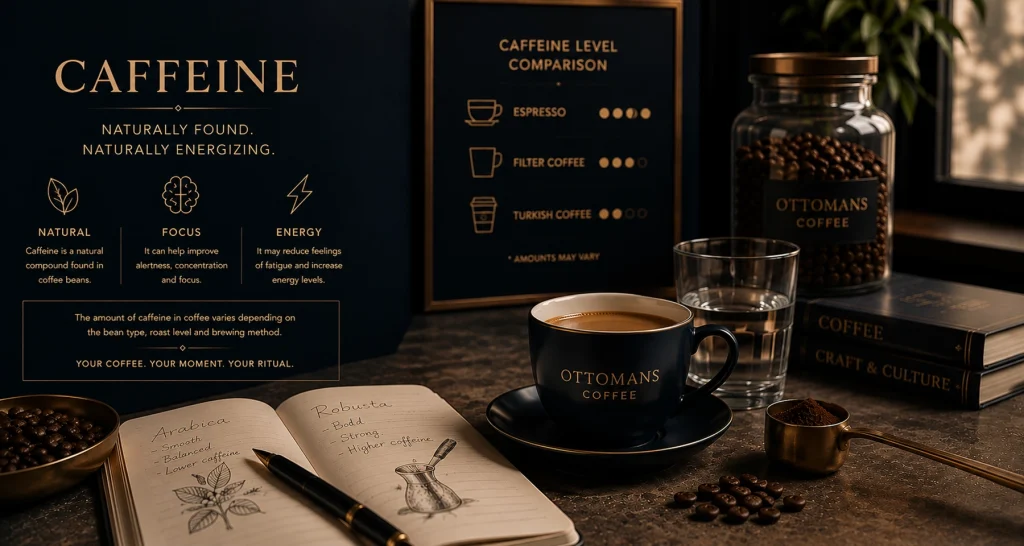
Coffee culture and caffeine science
Caffeine is one of the world’s most widely consumed natural stimulants and is naturally found in coffee, tea, cacao, and several other plants.
For centuries, people around the world have enjoyed caffeinated beverages not only for their flavor and aroma, but also for the sense of alertness and energy they can provide.
Coffee remains one of the most popular natural sources of caffeine worldwide.
What Is Caffeine?
Caffeine is a naturally occurring compound that stimulates the central nervous system.
It is commonly associated with:
- increased alertness,
- improved concentration,
- and reduced feelings of fatigue.
Because of these effects, many people enjoy coffee as part of their:
- morning routine,
- workday,
- study sessions,
- or social rituals.
Caffeine In Coffee
The amount of caffeine in coffee can vary depending on several factors, including:
- coffee bean variety,
- roast level,
- brewing method,
- grind size,
- and serving size.
For example:
- espresso is concentrated but served in smaller portions,
- while filter coffee often contains more caffeine overall due to larger serving sizes.
Different brewing styles create different caffeine experiences.
Coffee Bean Varieties
The two best-known coffee species are:
- Arabica,
- and Robusta.
Arabica coffee generally contains less caffeine and is often appreciated for its smoother and more delicate flavor profile.
Robusta coffee naturally contains more caffeine and is known for its stronger, bolder taste.
Effects Of Caffeine
Moderate caffeine consumption may help:
- improve focus,
- support mental alertness,
- and temporarily increase energy levels.
Many people also enjoy the ritual and comfort associated with caffeinated coffee throughout the day.
However, caffeine sensitivity varies from person to person.
Some individuals may prefer:
- smaller servings,
- lighter coffee,
- or decaffeinated options.
Timing & Balance
Because caffeine can remain active in the body for several hours, some people choose to avoid coffee later in the evening.
Others may enjoy:
- espresso after meals,
- morning filter coffee,
- or decaffeinated coffee at night.
Finding a balanced routine often depends on personal lifestyle and tolerance.
More Than Stimulation
Although caffeine is one of coffee’s best-known components, coffee culture is about much more than stimulation alone.
Coffee also represents:
- hospitality,
- conversation,
- craftsmanship,
- relaxation,
- and tradition.
From traditional Turkish coffee to modern espresso culture, coffee continues to be part of everyday life across the world.
A Timeless Coffee Tradition
Whether enjoyed for energy, focus, flavor, or simple daily ritual, caffeine has helped make coffee one of the world’s most beloved beverages for centuries.
At Ottomans Coffee, we celebrate both the science and the culture behind every cup of coffee.